Musique
Con d'Amore
samedi 5 septembre 2026 · 18:00Bürglenkapelle · Bourguillon
À propos de l'événement
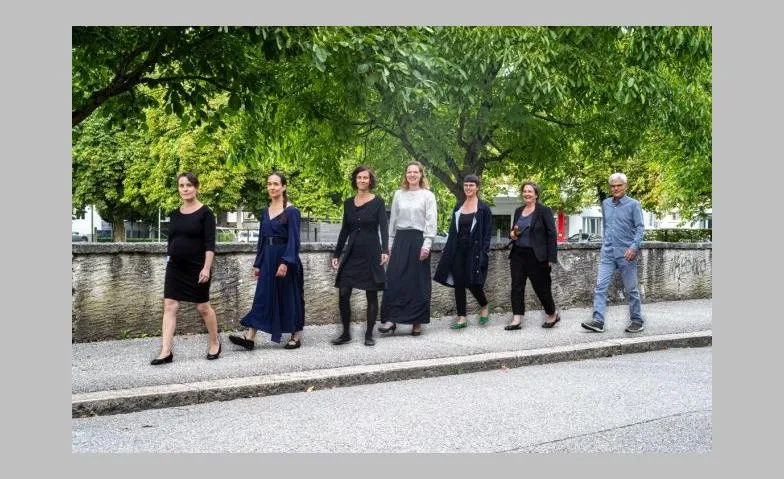
Die „d’Amore“-Instrumente bestechen durch ihre charakteristische Wärme und Ausdruckskraft. Die farbenreiche Besetzung des Barockensembles Grenzklang entfaltet eine breite Klangpalette, die von sanfter Melancholie und komplexem Kontrapunkt bis hin zum „galanten“ Stil des Spätbarocks reicht. Ensemble Grenzklang Annette Kappeler – Viola d’amore, Viola Mojca Gal – Viola d’amore Sabina Weyermann – Oboe d’amore, Blockflöte Dominique Tinguely – Blockflöte, Fagott Dina Kehl – Viola da Gamba Rainer Walker – Cembalo Niels Pfeffer – Theorbe Programm: Johann Sebastian Bach (1685–1750) Sinfonia aus der Kantate BWV 152 „Tritt auf die Glaubensbahn“ (Weimar, 1714) Heinrich Ignaz Franz Biber (1644–1704) Harmonia artificioso-ariosa, Suite VII in c-Moll für zwei Violas d’amore und Basso continuo Georg Böhm (1661–1733) Trio in G-Dur für Viola d’amore, Oboe d’amore und Fagott Johann Schuchbauer (ca. 1710–nach 1758) Trio für zwei Violas d’amore und Basso continuo Johann Joachim Quantz (1697–1773) Trio in a-Moll für Oboe d’amore, Flauto traverso und Basso continuo Johann Gottlieb Janitsch (1708–1763) Quartett in e-Moll für Oboe d’amore, zwei Violen und Basso continuo, op. 5B Ensemble: Ensemble Grenzklang Solist: Annette Kappeler – Viola d’amore, Viola Mojca Gal – Viola d’amore Sabina Weyermann – Oboe d’amore, Blockflöte Dominique Tinguely – Blockflöte, Fagott Dina Kehl – Viola da Gamba Rainer Walker – Cembalo Niels Pfeffer – Theorbe
Lieu
Tickets